Tackling a major renovation or landscape overhaul along the Space Coast often leaves homeowners and contractors staring at two massive piles of rubbish: discarded drywall, broken tile, and 2x4s on one side, and trimmed palm fronds, storm branches, and sod on the other. When you rent a dumpster, the most tempting thought is often, “Can’t I just throw everything into the same container to get it done in one trip?”
In Brevard County, the short answer is no. Mixing vegetative yard waste with construction and demolition (C&D) debris in the same roll-off container violates local solid waste management guidelines, risks load rejection at county disposal facilities, and triggers significant financial penalties.
Understanding Florida environmental regulations, how Brevard County’s disposal facilities operate, and how to stage your project correctly can save you hundreds of dollars in avoidable surcharges. Here is a deep dive into why these materials must stay separate, how county facilities enforce disposal streams, and how choosing the right roll-off dumpster rental services keeps your project on budget and fully compliant.
The Core Rule: Florida Environmental Law and Brevard County Facilities
To understand why mixing materials in a dumpster creates problems, you first have to look at where your debris ends up. In Brevard County, waste is routed through facilities like the Central Disposal Facility (CDF) in Cocoa or regional transfer stations such as the Sarno Transfer Station in Melbourne and the Mockingbird Way facility in Titusville.
These facilities are designed to handle distinct categories of refuse under regulations set by the Florida Department of Environmental Protection (FDEP):
- Vegetative Yard Waste: Organic, biodegradable green material such as tree limbs, palm fronds, brush, leaves, shrubbery cuttings, and logs.
- Construction and Demolition (C&D) Debris: Non-water-soluble, non-hazardous materials resulting from construction, remodeling, repair, or demolition, including drywall, lumber, roofing shingles, concrete, brick, tile, and plumbing fixtures.
Florida statute strictly regulates how organic matter enters disposal streams. Green waste breaks down rapidly, releasing methane gas and producing acidic leachate when trapped beneath heavy synthetic debris in unlined or C&D-specific cells. Because of this, Brevard County mandates that vegetative waste be diverted away from standard construction debris cells so it can be safely mulched, composted, or processed for commercial land cover.
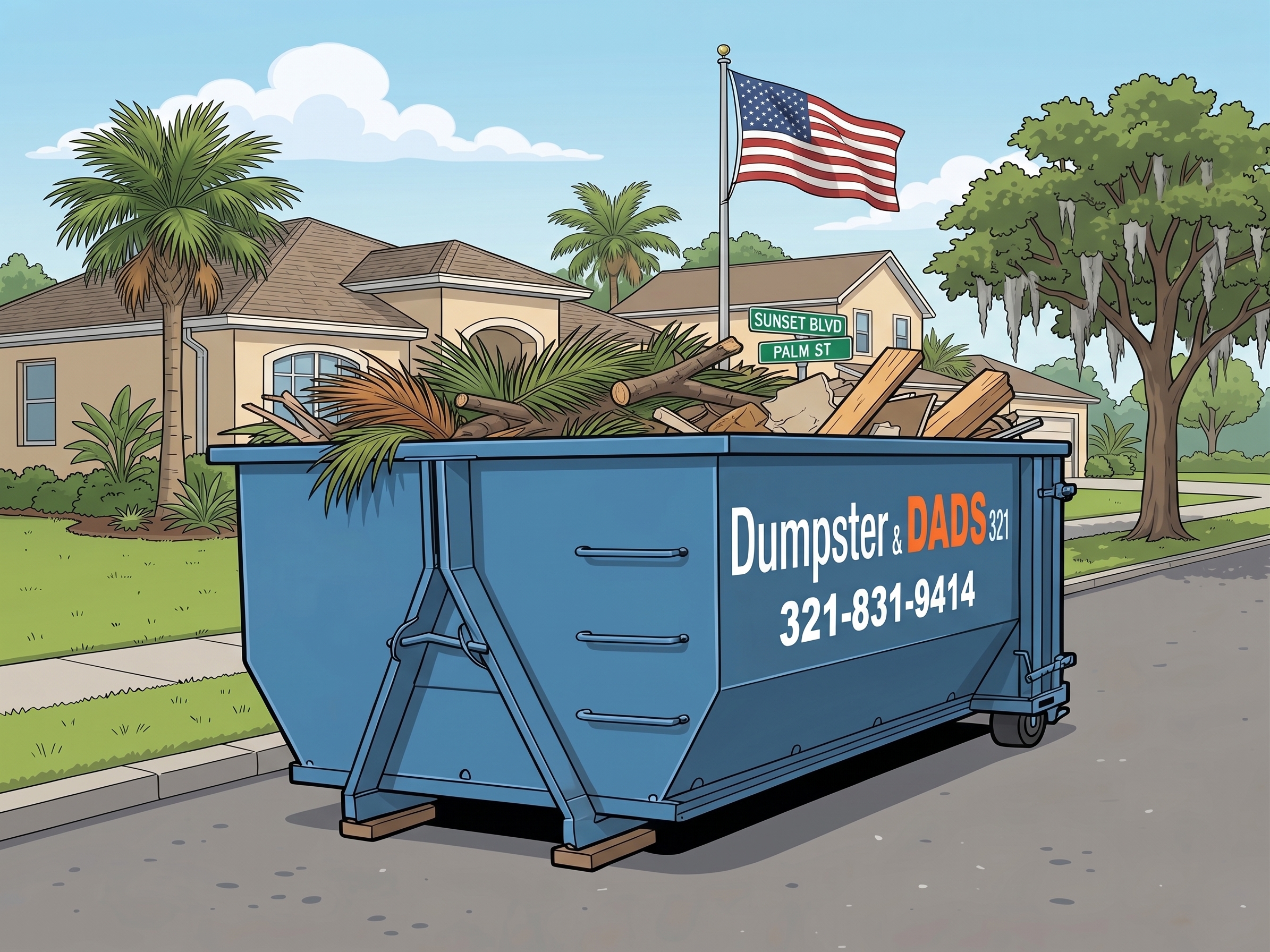
When you mix palm branches and 2x4s into a single roll-off container, you eliminate the facility’s ability to recycle that green waste, creating operational hazards for county machinery and violating waste stream separation mandates.
What Happens at the Scale House: The True Cost of Contamination
When our roll-off drivers transport your loaded dumpster to a Brevard County transfer station or landfill, the truck stops at the scale house for weight recording and an initial visual inspection. From there, the container is tipped onto an active disposal pad or working floor.
If a customer loads vegetative waste into a dumpster designated for C&D, several costly problems occur immediately:
1. The “Contaminated Load” Reclassification
Facility spotters continuously monitor every load dumped on the tipping pad. If organic yard trash is mixed into a container categorized as construction debris, the inspector flags the entire container as a contaminated mixed load. Instead of being processed at specialized aggregate or C&D recovery rates, the load is reclassified at standard municipal solid waste (MSW) or contaminated debris rates.
2. Steep Surcharges and Tipping Fees
Brevard County assesses distinct per-ton fee structures depending on the purity of the material. Contaminated loads carry higher base tipping fees, and facilities frequently assess punitive surcharges to account for the labor required to handle mixed materials. Because heavy construction materials like broken stucco or tile add immense dead weight to the container, having that high tonnage re-billed at elevated rates results in a massive disposal bill.
3. Equipment Jamming and Safety Hazards
Industrial wood chippers and tub grinders that process Brevard County’s green waste into organic mulch cannot process drywall screws, metal brackets, electrical wiring, or masonry chunks. When contaminated green waste slips into high-speed grinding equipment, nails and concrete chunks can turn into dangerous airborne projectiles or destroy expensive cutter heads. For this reason, green waste facilities will reject any load containing even trace amounts of construction debris.
If your upcoming project includes tearing out flooring, cabinets, or drywall alongside outdoor cleanup, checking our comprehensive construction and demolition debris guide will help you identify which materials are permitted in each container type before you start loading.
The Material Breakdown: Yard Waste vs. Construction Debris
Keeping your project compliant is straightforward once you know which pile every item belongs to. Use this practical breakdown to keep your job site organized:
| Vegetative Yard Trash (Accepted) | C&D Construction Debris (Keep Separate) |
|---|---|
| ✔ Palm fronds, boots, & palm trunks | ✔ Plywood, 2x4s, studs, & joists |
| ✔ Tree limbs, branches, & brush | ✔ Drywall, sheetrock, & plaster |
| ✔ Shrubbery clippings & hedge trimmings | ✔ Ceramic tile, porcelain, vinyl flooring |
| ✔ Untreated organic logs & tree stumps | ✔ Asphalt shingles, roofing felt, & underlayment |
| ✔ Clean sod & loose organic soil chunks | ✔ Concrete chunks, bricks, & CMU blocks |
| ✘ NO pressure-treated wood or fencing | ✘ NO cut tree limbs, brush, or palm fronds |
| ✘ NO painted landscape timbers or railroad ties | ✘ NO fresh grass clippings, sod, or compost |
The Gray Areas That Trip People Up
- Pressure-Treated Wood and Fencing: Even though fencing and deck boards are made of wood, they are chemically treated with preservatives to resist rot and pests. Pressure-treated lumber is never accepted as yard waste. It is categorized strictly as construction debris.
- Landscape Timbers and Railroad Ties: These items contain heavy creosote or chemical treatments and must be handled under C&D or specialty waste guidelines, not alongside green branches.
- Dirt and Clean Fill: Large volumes of dirt, sand, and fill cannot simply be dumped on a green waste pad. Excess earth requires clean fill classification to prevent overloading standard containers.
How to Manage a Combined Home Renovation and Yard Cleanup Project
Homeowners and contractors in cities like Melbourne, Palm Bay, Cocoa, and Merritt Island frequently tackle comprehensive property flips or post-storm cleanups that generate both debris types at once. If you are facing piles of both yard waste and demo scrap, here is the professional blueprint for managing disposal cleanly:
1. Stage Your Project in Sequential Phases
If your budget or driveway space only accommodates one roll-off container at a time, divide your project timeline into distinct stages:
- Phase One (Outdoor Clear-Out): Rent a dedicated yard waste dumpster first. Cut back overgrown trees, trim palm fronds, dig out unwanted bushes, and fill the container strictly with green waste.
- Phase Two (Interior or Exterior Demo): Once the hauler hauls the yard waste away, have an empty roll-off container placed for the demolition phase to handle old cabinets, drywall, flooring, and lumber.
2. Rent Dual Containers for High-Volume Jobs
For major property renovations or large-scale contractor remodels, having two smaller bins simultaneously—such as a pair of versatile 10-yard dumpster rentals—is often far cheaper than paying the contamination penalties of a single mixed 30-yard container. Your crew can toss landscape trimmings into one container and demo wreckage into the other without stopping work.
3. Break Down Dense Branches
When loading vegetative debris, use a chainsaw or loppers to trim limbs into 4- to 6-foot sections. Dense tree branches and bulky palm fronds create large air pockets when tossed randomly. Stacking logs and branches tightly at the bottom maximizes container volume and keeps you well below the top-rail safety line required for legal highway tarping.
Why Space Coast Contractors and Homeowners Trust Dumpsters & Dads
Navigating county waste ordinances, weight limits, and sorting rules shouldn’t make your renovation project harder than it already is. That is why homeowners, roofers, landscapers, and general contractors across Brevard County rely on Dumpsters & Dads for dependable, stress-free disposal.
Here is what sets our service apart:
- Transparent, Upfront Pricing: We believe in honest, straightforward service without surprises. You get transparent dumpster rental pricing and weight allowances with zero hidden fuel charges, administrative add-ons, or surprise environmental surcharges.
- Local Brevard County Expertise: Because we operate directly in the 321 area code, we know the exact disposal requirements, transfer station hours, and tipping protocols across Cocoa, Melbourne, and surrounding municipalities. We guide you on the right container type before delivery so your load never faces gate rejection.
- Dedicated Property Protection: Roll-off containers are heavy pieces of industrial equipment. Our drivers take deliberate care with every drop, utilizing protective driveway placement techniques to guard your asphalt, concrete driveway, or decorative pavers from scraping and cracking.
- Rapid Deliveries and Swift Turnarounds: Project delays cost money. Whether you need an early-morning delivery to kick off demo day or a same-day container swap so your landscaping crew can keep moving, our dispatch team provides responsive, dependable scheduling.
- Family-Owned, Customer-First Service: We aren’t a distant national broker with an automated phone tree. When you call Dumpsters & Dads, you speak with a real local professional who cares about keeping your job site safe, compliant, and clean.
Keep Your Job Site Moving: Book Your Brevard Roll-Off Today
Mixing yard waste with construction debris might seem like a convenient shortcut on a busy work afternoon, but the resulting landfill surcharges, load rejections, and sorting headaches can derail your project schedule and budget. By keeping your green waste separated from demo scrap, you protect your wallet and support responsible local recycling efforts across our coastal community.
Whether you need a dedicated green-waste bin for a major tree trim or a heavy-duty container for kitchen and bath demolition, our team is ready to get the right box to your job site on time.
Ready to lock in your roll-off container? Contact Dumpsters & Dads today to speak with our local team, get an instant quote, and schedule your delivery across Brevard County.