
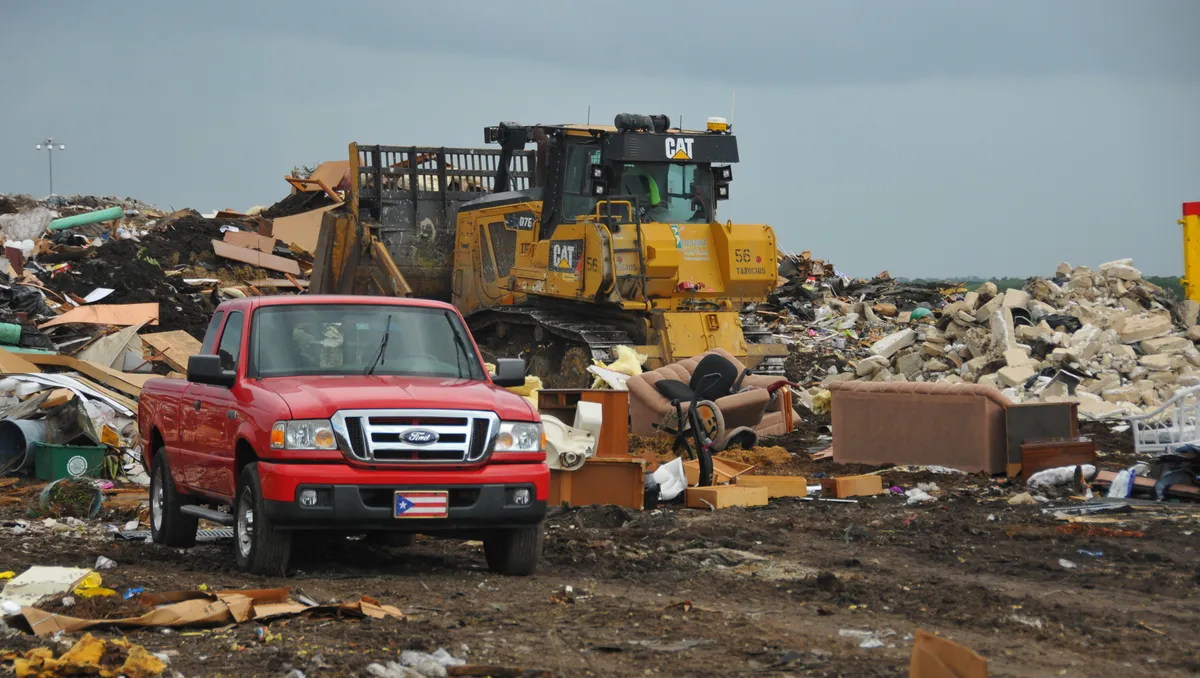
If you’ve ever loaded up your pickup truck with old furniture, lawn clippings, or renovation debris and headed down to a Brevard County disposal site, you already know the drill: pay the attendant, weigh in, and unload your junk.
It feels straightforward. So, it can come as a surprise when local contractors, landscapers, or commercial cleanout crews have to follow an entirely different rulebook.
Why can’t a commercial carrier roll up and dump or recycle materials the exact same way a private citizen can?
Understanding the behind-the-scenes rules of Brevard County’s waste and recycling facilities helps clear up why commercial drop-offs are handled with much stricter guidelines—and what it means for your community.
The Core Divide: Convenience vs. Commercial Regulation
In Brevard County—whether you’re utilizing facilities like the Central Disposal Facility in Cocoa or the Sarno Landfill—the rules change dramatically depending on whether the waste is generated by a household or a business.
1. The Streamlined Residential Experience
Private citizens benefit from municipal programs designed to make everyday disposal relatively simple and accessible.
Curbside Simplicity: Households enjoy single-stream recycling. Everyday items like paper, cardboard boxes, plastic jugs, and aluminum cans can all go into one green cart without needing to be sorted by hand.
Simplified Citizen Drop-Off: Individual residents hauling their own junk or standard yard waste often encounter simplified fee structures. In many cases, standard residential loads of vegetative yard waste or household electronics have specific drop-off allowances or minimal fees at county facilities.
2. The Commercial Reality: Strict Mandates and High Standards
Commercial carriers—such as independent junk removal services, landscaping companies, and general contractors—face a completely different operational framework. They cannot simply toss business-generated waste into standard public streams or local drop-off bins.
Prohibition of Residential Programs: Commercial entities are legally barred from using residential curbside programs or dropping commercial debris into municipal public-use recycling bins.
Mandatory Source Separation: While a resident might haul a mixed load of household debris to a landfill transfer station, commercial haulers are frequently subjected to strict pre-sorting requirements. Loads containing a mix of recyclable metals, clean wood, drywall, and cardboard often must be separated before arriving at the scale house. Dumping un-sorted commercial loads can trigger heavy financial penalties or outright rejection at the gate.
State Diversion Tracking: Florida enforces aggressive statewide recycling targets. Commercial waste generators and haulers bear a much heavier regulatory burden to prove they are diverting regulated materials (like commercial cardboard and construction debris) away from active landfill cells.
Why Can’t Commercial Carriers Recycle the Same Way?
Several practical and legal reasons explain why commercial operations cannot rely on the same relaxed dumping parameters as private residents:
Contamination Risks at Scale: A single contaminated residential recycling bin might result in a few rejected items at the sorting facility. However, a commercial-scale truckload contaminated with prohibited industrial materials can ruin tons of recyclable commodities, halting sorting machinery and driving up processing costs for taxpayers.
Different Legal Classifications: Commercial waste is legally defined differently than municipal solid waste (MSW). Regulations set by the Florida Department of Environmental Protection (FDEP) require commercial operations to account for their waste streams separately to ensure industrial, construction, and hazardous byproducts never mix with public municipal streams.
Heavy Infrastructure Wear: Landfills operate on commercial tipping fees that account for the heavy wear and tear caused by multi-ton commercial box trucks, dump trucks, and heavy machinery. Private citizens typically enter under different vehicle classifications and gate fee tiers.
What This Means for Consumers
While these regulations target businesses and haulers, they ultimately benefit the wider Brevard County community. By keeping commercial waste strictly regulated and separated, local facilities can:
Extend the operational lifespan of local landfills.
Keep recycling streams clean and economically viable.
Ensure that commercial enterprises take responsibility for the environmental footprint of the waste they generate.
The next time you see a commercial truck queuing up at a separate commercial scale house, you’ll know it’s not just red tape—it’s part of a vital system keeping our local environment protected.
Want to learn more about how local waste management impacts your neighborhood? Check out our latest community guides and sustainability tips today.