
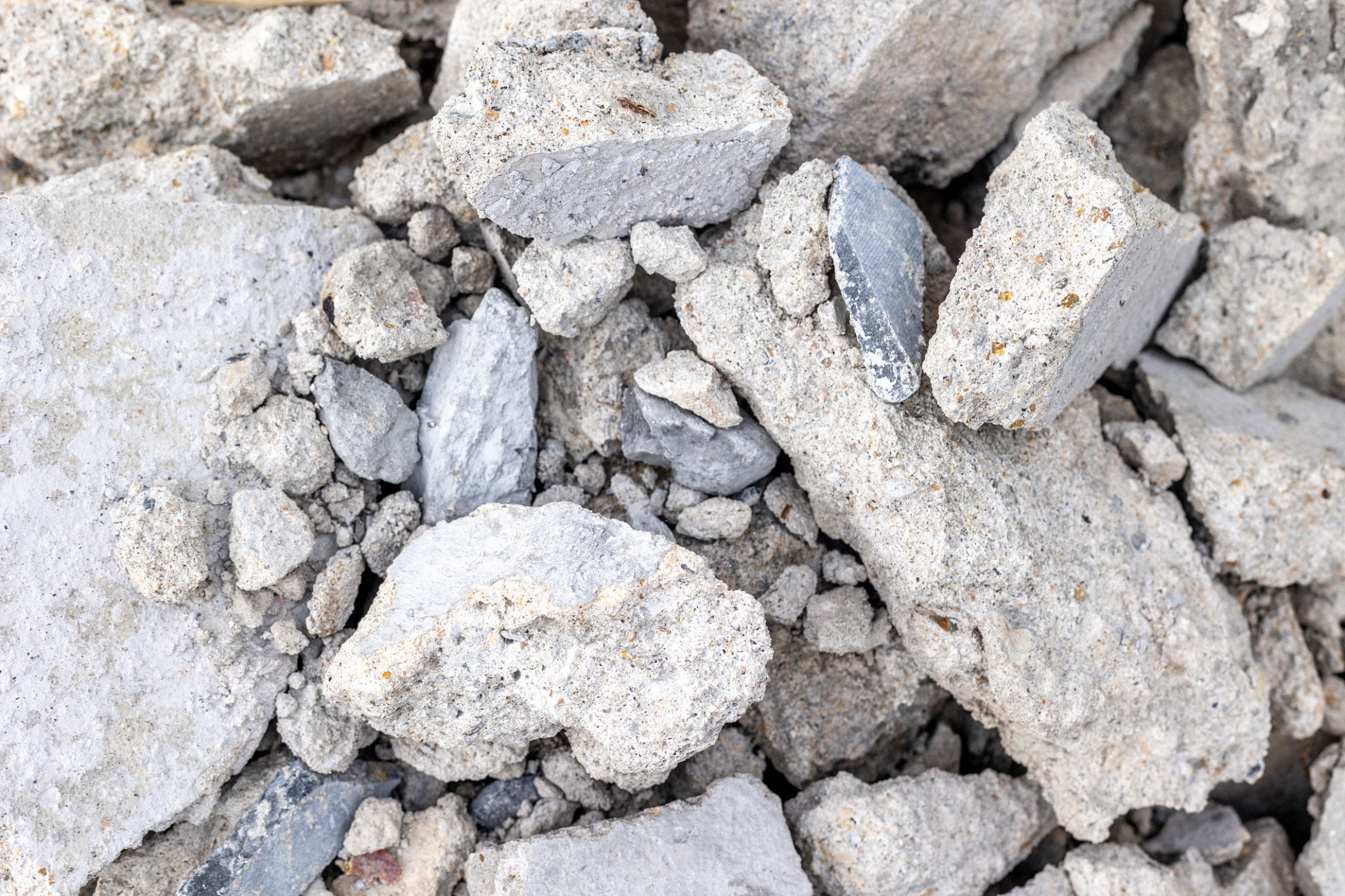
What Is Clean Concrete? The Landfill, Recycling, and Dumpster Rental Guide
What Is Clean Concrete? The Landfill, Recycling, and Dumpster Rental Guide
If you are gearing up to tear out an old patio, replace a cracked driveway, or demo a backyard foundation, you will quickly encounter the term “clean concrete.” Waste haulers, municipal transfer stations, and material recovery facilities emphasize this term because it directly dictates how your heavy debris is processed and how much your disposal will cost.
From an environmental and landfill perspective, “clean” does not mean washed down with a garden hose or free of surface dust. Instead, clean concrete refers to material purity—masonry debris that is 100% free of organic matter, trash, wood, soil, and hazardous chemicals.
Understanding the difference between clean concrete and mixed construction debris can save you hundreds of dollars in landfill surcharges. This guide breaks down how landfills and recycling facilities define clean concrete, what items are permitted, how aggregate recycling works, and how renting dedicated roll-off dumpster rental services keeps your project compliant and affordable.
Why Landfills and Recycling Facilities Treat Concrete Differently
Concrete is one of the heaviest, densest, and most durable materials in modern construction. A single cubic yard of solid concrete weighs approximately 4,050 pounds—just over 2 tons. Because of its weight and physical properties, handling concrete in the standard waste stream presents two distinct operational challenges:
1. Airspace Depletion at Municipal Solid Waste (MSW) Landfills
Standard municipal solid waste landfills are engineered with complex geomembrane liners, leachate collection pipes, and methane recovery networks designed to safely contain decomposing organic and household waste. Dumping massive chunks of non-decomposable concrete into an MSW landfill takes up critical vertical volume (known in the waste industry as “airspace”) that cannot be compressed. To discourage this, landfills charge steep tipping fees per ton for unprocessed heavy demolition waste.
2. High Demand for Aggregate Diversion
Unlike household plastics or mixed waste, clean concrete is 100% recyclable. When separated at the source, haulers divert concrete away from landfills and deliver it directly to aggregate crushing yards. There, industrial jaw crushers pulverize the slabs into Recycled Concrete Aggregate (RCA). This crushed stone serves as an eco-friendly, cost-effective substitute for virgin gravel in road bases, structural backfill, retaining wall foundations, and urban drainage beds.
When you keep your concrete clean, facilities charge significantly lower processing fees because the material becomes a valuable commodity rather than deadweight waste.
The Clean Concrete Checklist: Accepted vs. Prohibited Materials
To keep your roll-off load classified as clean concrete, every piece of debris loaded into the bin must meet strict facility acceptance criteria. Mixing unapproved materials changes the load classification from clean aggregate to mixed debris, triggering higher disposal rates.
┌─────────────────────────────────────────────────────────────────────────────┐
│                         CLEAN CONCRETE CRITERIA                             │
├──────────────────────────────────────────┬──────────────────────────────────┤
│           ACCEPTED MATERIALS             │       PROHIBITED CONTAMINANTS    │
├──────────────────────────────────────────┼──────────────────────────────────┤
│ ✔ Poured slabs (sidewalks, patios)       │ ✘ Excessive soil, clay, or dirt  │
│ ✔ Unpainted cinder blocks / CMU          │ ✘ Wood framing, 2x4s, & roots    │
│ ✔ Standard brick & pavers                │ ✘ Drywall, sheetrock, & plaster  │
│ ✔ Embedded rebar & wire mesh (cut flush) │ ✘ Household garbage & plastics   │
│ ✔ Cured, solid mortar & grout chunks     │ ✘ Oils, solvents, or lead paint  │
└──────────────────────────────────────────┴──────────────────────────────────┘
What Is Accepted in a Clean Concrete Load
Poured Concrete Slabs: Broken pieces from driveways, sidewalks, garage floors, retaining footers, and pool decks.
Cinder Blocks & CMU (Concrete Masonry Units): Standard structural blocks, split-face blocks, and concrete retaining blocks without heavy surface finishes.
Bricks & Pavers: Kiln-fired clay bricks, concrete pavers, and interlocking driveway pavers.
Concrete with Embedded Rebar or Mesh: In most industrial facilities, concrete with internal steel reinforcing bar or wire mesh is accepted. High-powered electromagnets pull the scrap steel out during the crushing phase. However, rebar protruding excessively from broken slabs should be cut flush to prevent it from tangling in collection equipment.
What Is Strictly Prohibited (Contaminants)
Excavated Dirt and Mud: A light dusting of soil on slab bottoms is normal, but large clumps of excavated dirt, clay, or sod contaminate aggregate screens and add unnecessary weight.
Lumber, Pallets, and Tree Roots: Organic materials rot over time. If wood chunks or tree roots enter a recycled aggregate crusher, they create void spaces in the final road base product, compromising structural compaction.
ASAP Site ServicesDrywall and Gypsum Plaster: Drywall introduces sulfates into the aggregate mix, which weakens recycled concrete and causes environmental leaching.
Trash, Plastic Sheeting, and Tarps: Vapor barriers, packaging materials, and general project trash will contaminate an entire aggregate batch.
Painted Concrete (Pre-1978 Structures): Concrete surfaces coated in vintage lead-based paints, petroleum stains, or industrial solvents cannot be processed into public-use aggregate due to environmental toxicity regulations.
Wet, Uncured Concrete: Never wash out concrete trucks, pump lines, or wheelbarrows into a roll-off dumpster. Liquid concrete cures to the container’s steel floor, causing structural damage and severe cleaning penalties.
redbox+ Dumpsters
For projects involving mixed building materials like framing, roofing, and flooring alongside masonry, review our detailed construction and demolition (C&D) waste guidelines to pick the right disposal stream.
How Contamination Triggers Costly Landfill Penalties
When a roll-off driver arrives at an aggregate recycling facility or transfer station, the load passes through a gross-weight scale and an initial visual inspection.
If your container contains clean concrete, the truck dumps directly at the processing pad, the weight is logged at the reduced clean-aggregate rate, and the material moves directly into the crusher.
However, if the inspection reveals wood, plastic, trash, or excessive dirt mixed into the load:
Rejection at the Gate: The facility may reject the load outright. The driver must transport the dumpster to an MSW landfill, doubling transit time and fuel surcharges.
Reclassification to C&D Rates: Landfills will reclassify the container as mixed construction debris. While clean concrete often enjoys reduced flat-rate tipping fees, mixed C&D debris is billed at standard per-ton landfill rates. Because concrete is extraordinarily heavy, this reclassification can result in steep overage bills.
Manual Sorting Surcharges: If a facility accepts the load but must assign personnel and equipment to manually pull contaminants from the pile, labor fees are charged back to the customer.
Best Practices for Loading a Concrete Dumpster
To protect your budget, keep your crew safe, and make hauling seamless, follow these key loading strategies:
1. Select the Correct Dumpster Size
Concrete should rarely be loaded into large 30- or 40-yard containers. Because concrete weighs approximately 1 ton per half-cubic yard, filling a large container will exceed Department of Transportation (DOT) gross vehicle weight limits (typically 20,000 lbs or 10 tons of payload per haul).
Compact 10-yard dumpster rentals with low sidewalls are the industry gold standard for heavy aggregate. The lower walls make it easier to load broken chunks with wheelbarrows or compact skid steers without lifting heavy rubble over high steel sides.
2. Break Chunks Down to Manageable Sizes
Use a 10-lb sledgehammer, rotary breaker, or mini-excavator hydraulic hammer to break slabs into basketball-sized pieces (approx. 12 inches across). Smaller pieces pack more efficiently, eliminating empty air pockets and preventing jagged points from sticking above the top rail.
3. Respect the Max Fill Line
Heavy material must never be loaded above the top rail of the roll-off container. In fact, most concrete loads must remain level or below the designated heavy-debris fill line. State transport laws require all roll-off containers to be mechanically tarped before entering highways to prevent loose stones from damaging passing vehicles. If debris protrudes above the rim, the driver cannot legally or safely transport the container.
4. Shake Off Excess Dirt at the Dig Site
When removing footers, post foundations, or walkway edges, use a flat-edge shovel or mattock to knock heavy clay, mud, and roots off the concrete before placing it into your bin.
Why Contractors and Homeowners Choose Dumpsters & Dads
Handling heavy aggregate demolition requires dependable equipment, prompt turnarounds, and honest pricing. Here is why local contractors, landscapers, and homeowners partner with Dumpsters & Dads for their masonry and demolition projects:
Transparent, Flat-Rate Heavy Debris Pricing: We take the guesswork out of disposal. Check our upfront heavy material dumpster pricing with clear tonnage allowances, zero hidden fuel charges, and no surprise administrative line items.
Specialized Heavy-Haul Equipment: Our roll-off trucks and dedicated aggregate containers are maintained to handle high-tonnage loads safely, ensuring strict DOT compliance on every haul.
Jobsite & Driveway Protection: Heavy containers need careful handling. Our experienced drivers use professional placement techniques and surface protection methods to shield your asphalt, concrete, or pavers from scrapes and cracking.
Fast Swap-Outs and Flexible Scheduling: Demolition moves fast. When your concrete bin is full, our team provides rapid swaps to keep your skid steers running and your crew on schedule.
Family-Owned Dependability: We treat your job site with the same care and urgency we would our own. You get direct communication, responsive customer support, and local expertise.
Plan Your Concrete Removal with Confidence
Keeping your concrete separated and clean is the single most effective way to lower demolition costs while keeping reusable building materials out of local landfills. Whether you are a homeowner tackling a weekend sidewalk overhaul or a commercial contractor managing a multi-phase structural demo, having the right roll-off partner makes all the difference.
Ready to schedule your drop-off? Contact Dumpsters & Dads today to book your heavy-material roll-off container, get expert sizing advice, and lock in reliable service for your next project.